

What Is Energy Shopping & Why Does It Matter?
If you reside in a state that has a deregulated energy market, you’re able to shop around to find deals on who supplies your electricity and natural gas. There are many different retail energy providers who compete for your business by offering different rates, plans, and contract structures. Knowing how to compare energy plans from these suppliers provides homeowners with the opportunity to secure savings, flexibility, and avoid bad contracts.
A Step-by-Step Guide to Energy Shopping
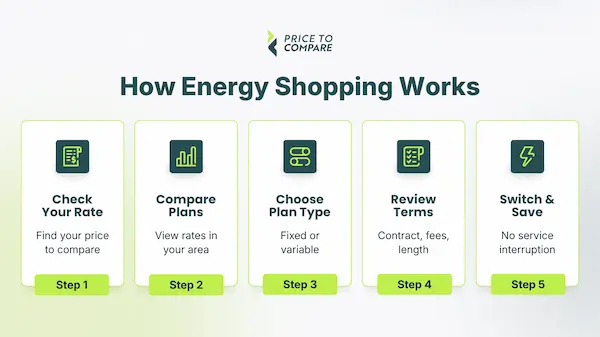
Our five-step guide explains in detail how to take advantage of your state’s electric choice. Lock in savings and the contract that fits your unique needs by utilizing this simple guide.

Step 1: Check Your Current Energy Rate & Usage
Refer to your monthly energy bill to find your current energy rate and usage. This will be your baseline when it comes time to compare supplier rates. If those rates are lower than the current price you’re paying, then looking to switch to a supplier with a more competitive rate can save you money. Many suppliers can also accommodate your specific energy usage needs.

Step 2: Compare Energy Rates & Suppliers in Your Area
Learning how to compare electricity rates and suppliers is easier than you may think. You could manually look through each retail provider’s website to find rates in your area to compare them, but this can take longer than necessary. By utilizing Price to Compare’s free-to-use online marketplace, once you enter your zip code, you’ll get a side-by-side comparison of plans and rates from top-rated suppliers in your area. This allows you to easily compare and make educated decisions.

Step 3: Choose the Right Plan Type
Knowing how to compare energy plans is just as important as comparing the rates. Typically, residential plan options are either labeled as a fixed rate or a variable rate. Fixed-rate plans are a stable, safe plan option for those who want a consistent monthly bill. You lock in the agreed-upon rate with the supplier for the entire duration of your contract. Variable-rate plans offer more flexibility and opportunity to secure lower rates. This short-term plan ties your rate to the market index, so if the market dips, your rate for that month will be lower, saving you money.

Step 4: Review Contract Terms Before You Enroll
Before finalizing your choice, it’s important to review some key terms. Always ensure the contract length is something you’re comfortable with. If you sign a long-term contract and want to switch before its expiration date, you may be subject to early termination fees. It’s also important to know if you have an automatic renewal set up, because if your contract expires without being renewed, you may be subject to high variable rates from your utility company. Understanding your contract and pricing structure can save you in the long run.

Step 5: Switch Energy Suppliers with Confidence
Enrolling in a new supplier plan is very simple. Finalize the switch by signing your new contract. By cancelling your older contract and going with a new supplier, your home won’t experience any service interruptions whatsoever. The only difference you’ll see is your monthly bill, where it’ll have the new rate and supplier. You’ll be able to enjoy your newfound savings without the worry of losing power or paying a high monthly rate.
Common Mistakes to Avoid When Shopping for Energy
- Centering your entire decision on who has the lowest rate.
- Ignoring contract terms like early cancellation fees.
- Missing renewal or contract expiration dates.
- Not understanding your energy usage patterns and specific needs.
- Not shopping around all available options before making a decision.
Frequently Asked Questions
Can I switch energy providers at any time?
Is Price To Compare free to use?
Will my power or gas service be interrupted if I switch?
Are fixed-rate or variable-rate plans better?
How often should I shop for a new energy plan?
How long does it take to switch energy suppliers?
When will I see my new rate take effect?
Are there any fees to switch suppliers?
Compare Energy Rates with Price to Compare
Comparing energy prices and plans in your area has never been easier. Start saving on your energy bills today by exploring electricity and natural gas solutions.
Our Most Recent Blogs
Get the knowledge you need from experts you can trust. Browse our most recent blogs for practical advice, market updates, and helpful resources.