How Many Watts Does a Refrigerator Use?


Table of Contents
Key Takeaways
The average electricity usage of your home refrigerator is 300 to 800 watts, depending on the make and model you own. Additional factors can impact how much power your fridge uses, including its size, age, your home’s ambient temperature, and where it’s placed in your kitchen. Knowing your fridge’s energy consumption can help you identify cost-saving efficiency upgrades.
What’s the Average Wattage of Refrigerators Based on Model Type?
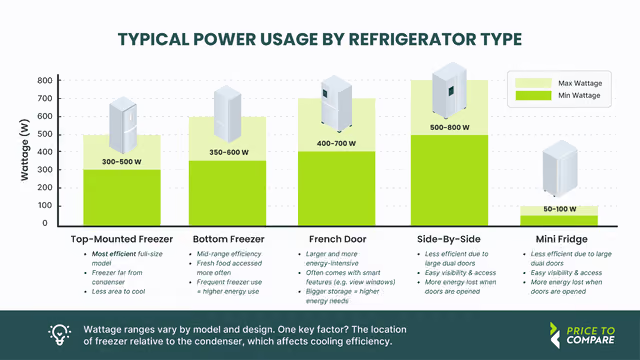
Refrigerator wattage requirements vary depending on the design of your appliance. For example, one of the biggest factors in refrigerator efficiency is where the freezer is in relation to your fridge’s condenser; this depends on the model. Knowing how much power your appliances consume can help you identify ways to reduce energy costs and improve efficiency. Below, we break down fridge power usage by model type, highlighting the differences and their minimum and maximum wattage amounts.
Top-Mounted Freezer Fridge Wattage
Top-mounted freezer refrigerators are generally the most efficient full-size fridge model. On average, top-mounted freezer fridges require 300-500 watts of power. In general, top freezer models are a bit smaller than other refrigerators. This means your fridge has less area to cool or freeze, leading to lower wattage. Top-mounted freezers are also located far away from the condenser, so it isn’t impacted by heat transfer.
Bottom Freezer Fridge Wattage
Bottom freezer refrigerators are in the mid-range of efficiency, requiring an average of 350-600 watts. For some households, they’re more efficient because the freezer portion is used less frequently than the fresh storage compartments. However, for households that commonly use frozen goods, regularly opening large bottom-freezers can increase their energy consumption.
French Door Fridge Wattage
French door refrigerator designs are typically larger and more energy-intensive, requiring an average of 400-700 watts. Fortunately, many French door styles are being integrated with smart features to help reduce high fridge power usage. One great feature of many smart French door styles is a viewing window. This allows you to view what’s inside without wasting energy by constantly opening the fridge.
Side-By-Side Fridge Wattage
Side-by-side refrigerators are a slightly less efficient model, requiring an average of 500-800 watts. The lack of efficiency can be attributed to the side-by-side design. Their large doors mean that more energy is wasted when opened, and it takes longer to go back down in temperature. If your family consistently opens the fridge, this may not be the option for you.
Mini Fridge Wattage
Mini fridge energy usage is typically minimal, as they require a mere 50 to 100 watts of power. This is ultimately due to their much smaller size. These are energy-efficient secondary options for offices and rooms other than your kitchen.
How to Calculate Your Refrigerator’s Power Consumption
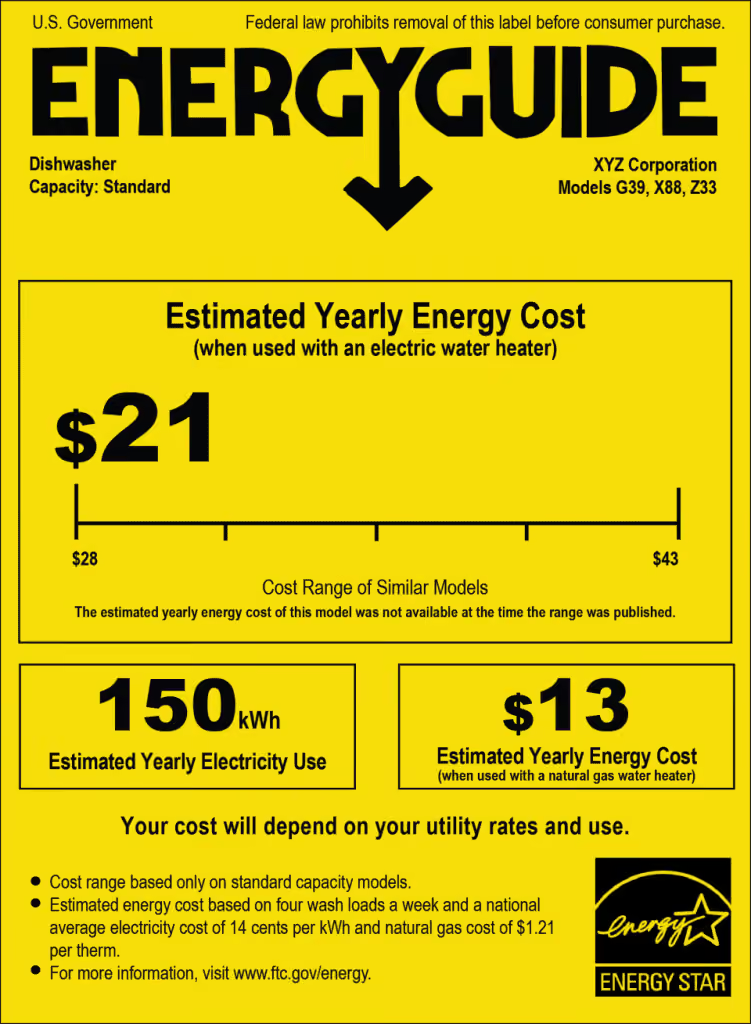
Calculating your fridge’s energy use is simple. Most modern fridge models put their efficiency front and center by displaying their EnergyGuide label. The federal government requires that appliances display their bright yellow EnergyGuide label to inform consumers about their operating costs and energy demands.
Take the estimated yearly electricity use from the label and multiply it by your local electricity rate to figure out your cost. This will provide you with an estimate of yearly costs. If your fridge is older and doesn’t have an EnergyGuide label, you can utilize a wattage meter to figure out energy use and costs.
Factors that Impact Fridge Energy Usage
Your refrigerator is one of the hardest-working home appliances, running 24/7 to keep your family’s food fresh and safe. However, the efficiency and power needs of your fridge depend on several factors – some within your control and others tied to the model you own. Understanding what makes your fridge consume more energy helps your family make smarter decisions that lower your monthly energy bills.
- The size and design of your fridge model make up the bulk of how much energy it uses.
- If your fridge isn’t well-stocked, it may not retain the cold, but if it’s overstocked, it can restrict airflow.
- The age of your fridge matters, as older models tend to be less efficient.
- Internal temperature settings impact usage by making the compressor run longer to make it colder.
- Frequency of use, including door openings, allows warm air to enter the fridge, making it use more power to cool again.
- The condition of the door seals is important because if they’re damaged, cold air can escape and warm air can seep in.
- Your home’s ambient temperature affects performance because a warmer home requires more energy to cool the fridge.
- Frost buildup in the freezer can make your fridge work harder, as excess ice reduces airflow and forces the system to utilize more energy.
- Proximity to heat-producing appliances, like ovens, dishwashers, or direct sunlight, can heat up the fridge, forcing it to use more energy to reach its desired temperature.
- Energy-efficiency rating plays a major role since newer models tend to consume less power than older units.
7 Energy Saving Tips for Refrigerators
1. Maintain an Ideal Temperature
It’s important to keep your refrigerator at the optimal temperature range for freshness and food, between 35 and 38 degrees Fahrenheit. You must never exceed 40 degrees, as it causes your food to spoil faster. Your freezer should maintain a temperature of 0 degrees to keep frozen foods safe for a long period of time.
2. Avoid Storing Hot Food
Never place hot food or drinks inside your fridge because it can raise the internal temperature, forcing it to use more energy. Make sure any leftovers are cooled to room temperature before refrigeration.
3. Keep the Door Closed
Keep the door closed as much as possible to maintain your fridge’s ideal interior temperature. Frequent door openings lead to temperature fluctuations, causing your fridge to consume more energy to regulate the temperature.
4. Clean Your Condenser Coils
If your condenser or evaporator coils have a buildup of dirt and debris, it can cause your fridge to use up to 90% more energy to stay cool. Clean your coils every 6-12 months for the best performance. However, you may need to clean them more frequently if you have pets that shed.
5. Check the Door Seals
Inspect your refrigerator door seals periodically to see if they are worn or damaged. Worn seals let cold air escape, causing your refrigerator to work harder to keep your food fresh. Keep your fridge door seals tight to improve efficiency.
6. Keep Your Fridge (Mostly) Full
A relatively full fridge maintains temperatures much better than an empty fridge. It’s important to keep your refrigerator well-stocked without restricting internal airflow. Furthermore, make sure your refrigerator is the proper size for your household, so you aren’t scrambling to fill an oversized fridge or left dealing with a packed fridge.
7. Know When to Upgrade
If your fridge is over 12 years old or has a difficult time cooling your food to a safe temperature, it’s likely time for an upgrade. Consider upgrading to a highly efficient Energy Star-certified model, which can lower your fridge’s energy usage by up to 35%!
Average Monthly Cost to Run a Refrigerator
To calculate the average monthly cost of running your refrigerator, you’ll use the following formula: Monthly kWh x Rate per kWh = Monthly Cost. For example, if you’re utilizing 1.5 kWh a day, you multiply that by 30 since it’s how many days are in the month. Once you have that number of 45 kWh per month, you plug it into the formula. If your monthly rate is $0.16 per kWh, the final formula will be: 45 kWh per month x $0.16 per kWh = $7.20 per month. You should also check fridge labels and energy ratings to help estimate costs.
Tips for Choosing an Energy-Efficient Fridge
- Choose the right size for your household needs. Getting a fridge that is too large will utilize more power when it may not be necessary for the number of groceries you have. By downsizing your fridge to one that better fits your needs, you can lower your monthly energy costs.
- Look for models with an ENERGY STAR® label, since their fridges are designed to use less electricity than standard units. Over time, these models can produce substantial savings for your home.
- Be selective with additional features like ice makers, water dispensers, and smart screens, since they require more power. A simpler model will require less wattage, saving you money.
- Consider where you place your fridge in your kitchen. Keeping your fridge away from appliances and areas that generate heat will ensure the temperature control remains optimal, and you won’t have to use more power to cool it back down.
- Select models with efficient freezer configurations. Top-freezer refrigerators tend to be more efficient than side-by-side and French-door designs. Consider how much energy the freezer will require before making your decision.
FAQs About Refrigerator Energy Use
Are there ways I can lower my refrigerator’s electricity usage?
Yes. You can upgrade to a more efficient model, stop opening the fridge constantly, clean the condenser coils of the appliance, check the door seals, and keep your fridge well-stocked. By utilizing these tips, you can lower your monthly utility bill.
Do smart refrigerators use more energy than standard models?
Smart refrigerator features, like touchscreens, Wi-Fi connectivity, cameras, and advanced cooling systems, often use slightly more electricity than standard models. However, ENERGY STAR® models, even with smart features, often are highly efficient.
How much can I save by upgrading to an ENERGY STAR® fridge?
If you’re replacing an older model with an ENERGY STAR® fridge, the long-term savings can be very high. These models require less power, saving you money on your monthly utility bills.
How does a refrigerator’s size and features impact electricity cost?
Larger fridges generally require more electricity to cool all of their space. Extra features, like ice machines, water dispensers, and smart technology, also contribute to increased energy usage.
Compare Energy Rates with Price to Compare
Comparing energy prices and plans in your area has never been easier. Start saving on your energy bills today by exploring electricity and natural gas solutions.

Our Most Recent Blogs
Get the knowledge you need from experts you can trust. Browse our most recent blogs for practical advice, market updates, and helpful resources.