How Does the Cost of Energy per kWh by Source Affect Your Bill?


Table of Contents
Key Takeaways
The electricity rate on your monthly bill will vary depending on how power is generated in your area. By understanding the cost of electricity by source, homeowners and businesses can make smarter energy decisions that lead to long-term savings.
What Causes Electricity Prices to Vary So Much?
From generation methods and fuel costs to infrastructure and market dynamics, more goes into your electricity rates than you might expect. What you pay for electricity often depends on your state’s market rules and the local energy sources powering your area. For example, fossil fuels like coal and natural gas include fuel costs, while renewable sources like solar and wind sometimes pass along extra costs for storage or reliability.

What is the Levelized Cost of Energy (LCOE)?
The levelized cost of energy (LCOE) estimates the average cost to produce electricity per kilowatt-hour over the lifetime of the power plant. LCOE helps suppliers and utilities compare the cost of different energy sources and can ultimately influence the electricity rates you see on your monthly bill.
Explore the Average Cost per kWh by Energy Source
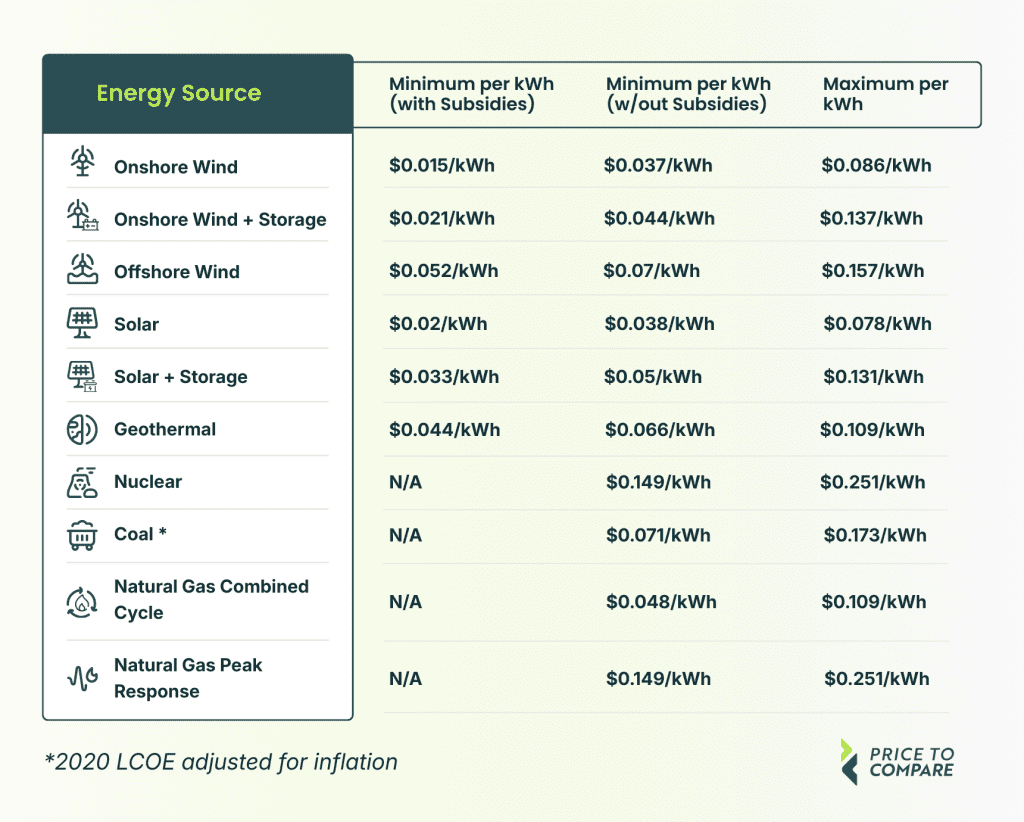
Energy production costs can vary widely depending on the source, installation process, fuel costs, and available federal subsidies. Below, we break down the levelized cost of energy for both renewable and traditional sources using data from Lazard’s 2025 LCOE Analysis.
What Are Clean Energy Subsidies, Exactly?
Clean energy subsidies are federal, state, and local incentives to encourage suppliers and consumers to invest in renewable energy technologies. They can take the form of tax credits, grants, or other financial support to lower the cost of building and operating renewable energy projects. While they don’t directly influence your bill, they can help make clean energy sources more affordable in your area.
The Unique Case of Nuclear Energy Costs per kWh
The cost of nuclear power per kWh is different from other energy sources. While traditional reactors come at a cost of $0.141/kWh, their LCOE can drop as low as $0.034/kWh if they undergo lifetime extension upgrades and certification. Upgrading, refurbishing, and recertifying outdated reactors can extend their standard 40-year lifespan to 60–80 years, dramatically lowering the cost per kilowatt-hour.
Electricity Generation Costs vs. What You Actually Pay
The type of energy you choose and how much you use aren’t the only things that affect your monthly bill. The average electric bill includes supply charges as well as delivery and service fees charged by your utility. Understanding how your bill breaks down can help you make cost-saving energy choices.
In deregulated energy markets, supply charges are established by retail electricity providers. These rates depend on the energy sources your supplier uses and how competitive the local market is. They’re charged as a cost per kilowatt-hour for both residential and commercial customers.
Delivery and service fees are set costs charged by your local utility company to cover delivering electricity to your home or business, billing, maintaining the grid, and restoring power after outages. While you can’t change your utility fees, you can compare suppliers, rates, and plans to lower your monthly bill.
What is the Cheapest Source of Electricity Today?
Even without financial incentives, onshore wind and solar are typically the two least expensive energy sources to generate in the U.S. However, they require specific geography and climate to be successful. Fossil fuels can be more expensive since fuel costs are often volatile, and some regions depend on imported resources. No matter what energy sources are available in your area, you can get the best electricity deal by comparing rates and plans side-by-side with Price to Compare.
Factors that Influence Your Cost per kWh
- Fuel cost volatility for natural gas and coal can affect electricity pricing.
- Changes in regional supply and demand affect local electricity rates.
- Energy grid maintenance and upgrades can raise monthly electricity costs.
- Weather events and seasonal changes can impact supply and demand.
- State and federal regulations, including renewable energy rules, influence pricing.
- Your local energy mix and access to imported resources can affect local energy rates.
How to Choose the Best Electricity Plan for Your Needs
Now that you understand the costs behind each electricity source, it’s time to find the right electricity plan for your home or business. The best choice will depend on your energy usage, what fits within your budget, and how much price stability you want over time. By factoring in these details, you can confidently pick a plan that aligns with your lifestyle and goals.

Compare Suppliers, Rates, & Plans
Start by comparing electricity suppliers, rates, and plan options available in your area. Focus on the suppliers’ customer reviews, contract terms, and sustainable options to narrow down your search.

Consider Fixed vs. Variable Plans
It’s important to choose the right rate structure for your goals. Variable plans may offer more flexibility, but most customers prefer the long-term stability and predictable bills that fixed rate plans provide.

Carefully Review Contract Terms
Before signing, make sure to carefully review the contract terms. Look for clauses like minimum usage fees, base service charges, and early termination fees to understand the full cost of your plan.
FAQs About the Cost of Electricity Generation by Source
What is the average electricity cost per kWh in the U.S.?
As of November 2025, the average residential electricity rate in the U.S. is 17.78¢ per kWh. The average commercial electricity rate in the U.S. is 13.19¢ per kWh. Lock in the best rates for your home or business by comparing options through the Price to Compare marketplace.
Why do electricity rates change throughout the year?
Electricity rates fluctuate throughout the year because different seasons have different energy needs. For example, heating and cooling needs increase in the winter and summer months, putting more pressure on the grid and raising electricity prices. On the other hand, mild spring and fall weather keeps energy demand low, leading to lower, more stable rates.
Do renewable energy plans cost more?
Ultimately, it depends on where you live and your available energy resources. Areas with abundant green energy sources, like Texas, often have a wider range of renewable energy plans at more competitive rates. However, if your region doesn’t have a lot of green energy generation, renewable energy plans can be more expensive.
How can you find other types of energy to utilize?
You can easily explore alternative energy plans for your home or business through comparison websites, like Price to Compare. We provide easy side-by-side plan comparisons, including details about each plan’s energy mix. Find your perfect fit in just a few clicks with Price to Compare.
Compare Energy Rates with Price to Compare
Comparing energy prices and plans in your area has never been easier. Start saving on your energy bills today by exploring electricity and natural gas solutions.

Our Most Recent Blogs
Get the knowledge you need from experts you can trust. Browse our most recent blogs for practical advice, market updates, and helpful resources.