Understanding Demand Charges on Commercial Energy Bills



Table of Contents
Key Takeaways
Demand charges can make up a significant portion of a business’s energy bill and are based on peak electricity usage rather than total consumption. Understanding your business’s energy usage patterns can help lower demand charges through strategies such as shifting energy use, reducing peak demand, improving efficiency, and using energy storage. Businesses in deregulated markets can also compare energy suppliers and plans to find an energy solution that better aligns with their usage, budget, and savings goals.
Are Demand Charges Draining Your Budget?
Have you ever opened your business’s monthly energy bill to an expensive surprise? Commercial energy expenses go beyond just supply, including demand charges that can account for up to 70% of your total bill! Demand charges are based on your company’s highest energy usage during peak periods, so they can have a major impact on your bottom line.
Fortunately, there’s some good news. By understanding how demand charges work, you can take control of your energy costs. Learn more about peak demand electricity charges and how to keep them in check with several proven strategies.
What is a Demand Charge on Electric Bills?
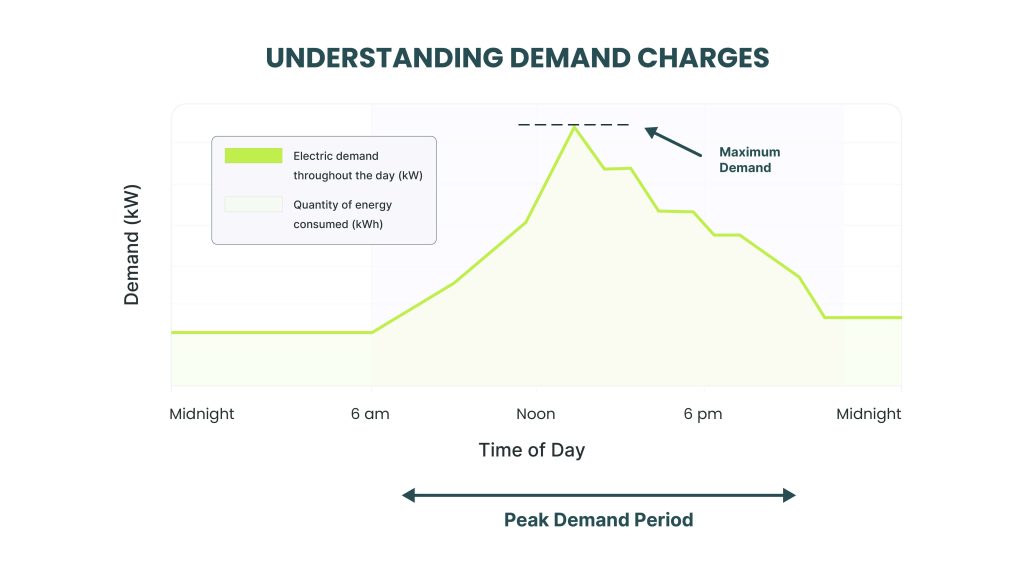
Demand charges are a fee on commercial energy bills that are based on the maximum amount of power a customer draws at any given time. Unlike supply charges, which are based on your total amount of electricity consumed in a billing period, demand charges reflect your highest level of usage during that time.
Electricity demand charges are designed to help reduce strain on the power grid by encouraging businesses to spread their usage out over time. These fees help utility companies recover the costs associated with distributing power to customers during peak demand periods.
Additional Types of Demand Charges
Most utilities charge businesses for their maximum demand during a set billing period, often called max or non-coincidental demand charges. However, there are a few additional types of demand-related fees that are important to know.
Time-of-Use (TOU) Charges
TOU demand charges are based on a business’s highest amount of usage during peak demand periods. These expensive fees encourage businesses to use less power when the grid is under stress.
Flat Demand Charges
Flat demand charges are a set rate paid per kilowatt based on a single demand reading during a billing period. This is the most straight-forward approach to demand-based fees.
Tiered Demand Charges
Also sometimes called block demand, tiered demand charges vary based on specific usage thresholds. As your usage enters a new tier, your business will receive an additional demand charge.
Daily Demand Charges
Instead of a singular demand reading, businesses receive a daily charge per kWh used. These fees are measured and added to your account daily through the use of a smart electricity meter.
Seasonal Demand
High-demand seasons, like summer and winter, may come with their own demand charges as well. These charges are most often applied between 4pm-7pm in the summer and 6am-10am in the winter, when regional energy usage is highest.
Coincident Peak Pricing
This type of demand fee occurs when a business’s highest recorded demand happens during their utility company’s peak demand periods. These fees reflect system-wide grid stress when your peak usage coincides with the utility’s peak.
How Do Demand Charges Impact Your Business?
Depending on how and when your business uses energy, demand charges can account for 30-70% of your monthly energy bill. It’s important to remember that demand charges are based on your highest usage, not total consumption. They penalize short bursts of high-power use that cause unexpected strain on the grid. For example, this could happen when multiple large appliances or systems start up at the same time. This means a single spike in your monthly usage can have a major impact on your energy bill, even if your monthly usage is relatively low.
Industries like hospitality, manufacturing, healthcare, and data centers are particularly vulnerable since they rely on energy-intensive equipment. However, any business that operates during peak demand hours can be affected. Understanding demand charges is the first step towards reducing them. With a thoughtful energy management strategy, your business can avoid unnecessary energy costs and stabilize demand-related fees.
How to Reduce Demand Charges in Electricity Bills
While you can’t control regional energy demand, you can control how and when your business uses electricity. Keep your company’s demand charges in check and lower your monthly bills with our six highly effective strategies. Use them independently or combine several methods to maximize your energy savings.
- Demand Response Programs: Utilities and some energy suppliers offer demand response programs to provide incentives to businesses who use less power during peak demand periods. These programs aim to lower overall consumption, reducing the need to run expensive generators or distribute power from storage facilities.
- Peak Shaving: Businesses can reduce demand charges by actively adjusting how they use energy throughout the day. For example, a hotel could practice peak shaving by staggering their laundry operations throughout multiple shifts instead of completing all laundry at once.
- Load Shifting: Businesses can reduce demand charges by shifting their operations, so energy-intensive equipment is only used during low-demand periods. For example, a delivery company could reduce costs by charging their EV fleet overnight rather than during the day.
- On-Site Renewable Energy: Another successful method is reducing your reliance on the power grid by investing in a renewable energy system. When your business generates its own electricity, you won’t need to pull power from the grid during peak demand periods.
- Energy Storage Systems: Investing in a battery energy storage system (BESS) is another way to reduce costs. By charging your battery during low-demand periods, your business can use the reserved power during peak demand periods, or even outages.
- Energy Efficiency Upgrades: Reduce costs and improve how your business uses energy by completing efficiency upgrades. Focus on high-impact upgrades, like HVAC systems, lighting, and heavy machinery for the biggest return on your investment.
Maximize Savings with the Right Energy Plan
Businesses in deregulated markets have an additional way to lower their energy costs: comparing energy suppliers, rates, and plans. From fixed-rate stability to flexible time-of-use pricing, choosing the right energy solution can instantly lower your monthly bills. Understanding what options are available in your local market empowers you to choose a cost-saving commercial energy solution.
At Price to Compare, we believe that finding your business’s ideal energy plan should be fast and easy. With side-by-side energy plan comparisons, our online marketplace can help you lower your business’s monthly bills with just a few clicks. In less than five minutes, you can sign up for a plan aligned with your unique business needs and budget.
Compare Energy Rates with Price to Compare
Comparing energy prices and plans in your area has never been easier. Start saving on your energy bills today by exploring electricity and natural gas solutions.
.avif)
Our Most Recent Blogs
Get the knowledge you need from experts you can trust. Browse our most recent blogs for practical advice, market updates, and helpful resources.